Types of Maryland Homes That Could Be Bad Investments
What if I told you there are homes scattered all across Maryland in normal neighborhoods, listed at normal prices, that are quietly becoming some of the worst investments in this market?
I'm not talking about obvious fixer-uppers or distressed properties. I'm talking about homes that look completely fine on paper. Homes that buyers are purchasing right now without fully understanding what they're getting into. And by the time most people realize there's a problem, it's already too late to sell without taking a loss.
After doing this for over 20 years right here in the DMV, I'm going to walk you through 5 specific types of homes in Maryland that I see following this pattern, and more importantly, how to avoid making one of these mistakes yourself. We'll cover FEMA flood zone risks in places like Silver Spring and Kensington, HOA reserve fund problems, the recent Thomas S. Wootton High School boundary changes affecting Rockville and Gaithersburg, condo special assessments in older buildings across Bethesda and Silver Spring, and commuter-dependent suburbs like Waldorf and outer Clarksburg.
Table of Contents
- FEMA Flood Zone Homes: The Hidden Cost Along Maryland's Waterways
- HOA Underfunded Reserves: When Your Neighbors' Problems Become Yours
- School Boundary Traps: The Thomas S. Wootton High School Rezoning and What It Means for Montgomery County Buyers
- Condo Special Assessments: Why Older Buildings Are Getting Harder to Finance
- Commuter-Dependent Fringe Locations: The Risk Nobody Talks About
- Which Maryland Housing Risk Should You Worry About Most?
- Conclusion
FEMA Flood Zone Homes: The Hidden Cost Along Maryland's Waterways
Number one surprises a lot of buyers because when you think of Maryland, you don't exactly think about flood zones. You think suburbs, local schools, and proximity to Washington, DC. But we do have significant flood risk here along the Potomac, along Rock Creek and Sligo Creek in Silver Spring, and parts of Prince George's County near the Anacostia.
Here's what catches buyers completely off guard: if a home sits in a FEMA-designated flood zone, specifically an AE zone, your lender may require you to have flood insurance. And that insurance isn't cheap. We're talking anywhere from $1,000 to $2,500 a year on top of your regular homeowner's insurance policy.
But honestly, the insurance cost isn't your biggest problem. The biggest problem is what it does to your buyer pool when you go to sell. Now you're asking every future buyer to absorb that cost, and a lot of them simply won't want to. So you end up with fewer offers, longer days on market, and downward pressure on your price. I've had buyers fall in love with a home, beautiful home, great neighborhood, and then we pull the flood map and suddenly the math just doesn't work the way they thought it would.
Here's what most buyers don't know: those flood maps aren't always right. In one case, we actually changed the flood zone designation, went through the formal process with FEMA, and we won. An entire street in Kensington is no longer certified as a flood zone because of our challenge. We saved my buyers thousands of dollars in insurance, and every buyer and seller on that street has benefited ever since.
I'm not telling you this to scare you away from homes near water. I'm telling you because you need someone in your corner who knows how to read these maps and more importantly, when to push back on them. So before you fall in love with any house that's near water, and I'm talking creeks to rivers to the bay to the ocean, pull the FEMA flood map. It's free, it's public, and it could save you from a very expensive surprise.

HOA Underfunded Reserves: When Your Neighbors' Problems Become Yours
Number two is one that I talk about a lot on this channel, and I talk about it a lot because I see it causing real problems for real people, both buyers and sellers. That's an HOA with an underfunded reserve fund.
I want to be really clear: this is not saying that all HOAs are bad. They're not inherently bad. A well-run HOA maintains the community, protects property values, and keeps the neighborhood looking the way everybody agreed it should look when they bought here. But here's the thing, when an HOA isn't properly funded, meaning they don't have enough money set aside for future repairs and major expenses, somebody eventually has to pay for it. And that somebody, my friend, is you.
The association has two options when a big expense hits. They can raise the monthly dues, or they can issue what's called a special assessment, a one-time charge to every single homeowner in the community. I've seen special assessments come in at $5,000. I've seen them at $15,000. I've had clients deal with assessments over $30,000 per unit.
And I'm not exaggerating when I tell you this is a conversation that no one wants to have in the middle of a real estate transaction. Here's what happens: I show a buyer a home, they love it, we're under contract, and then the HOA documents come in and the reserve fund is sitting at about 20% funded. The lender flags it, the buyer gets nervous (and rightly so), and the deal falls apart.
If you are buying in an HOA community, and a lot of Maryland communities have them, request the reserve study and the last 12 months of meeting notes before your contingency expires. What you find in those documents will tell you a lot more about the community than any walkthrough will ever tell you.
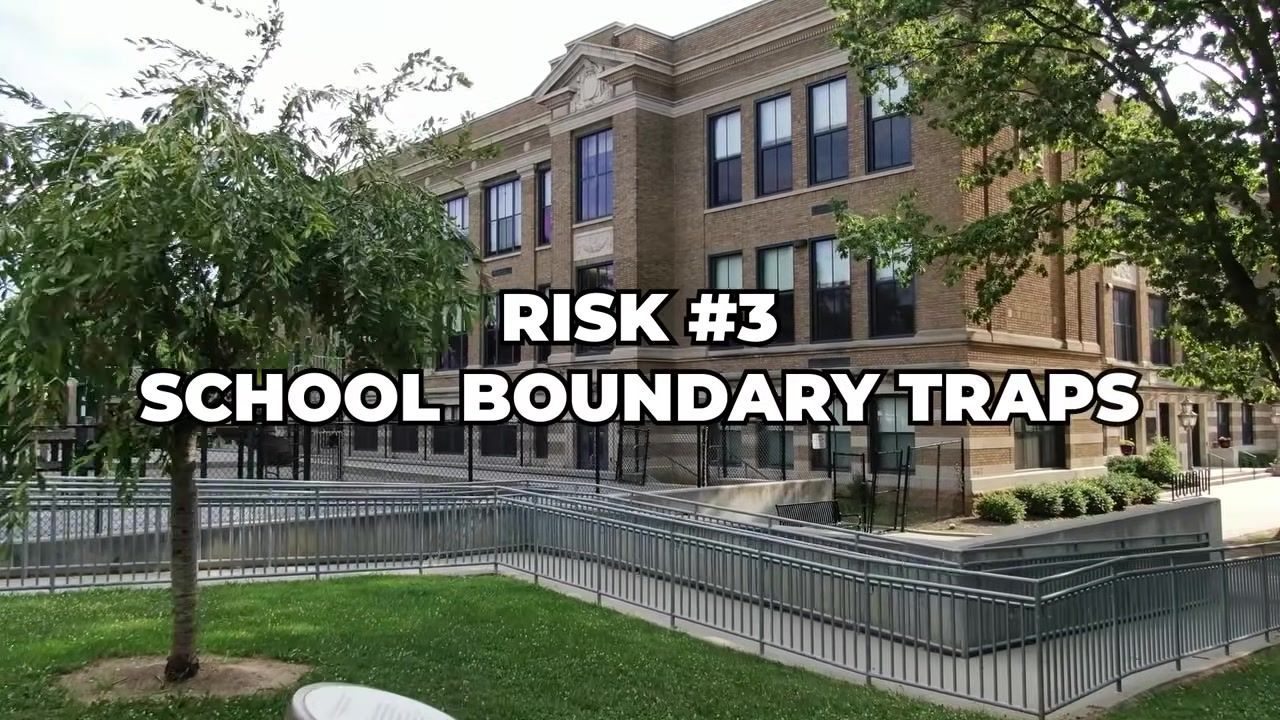
School Boundary Traps: The Thomas S. Wootton High School Rezoning and What It Means for Montgomery County Buyers
Number three shocks buyers that are new to this market, and honestly, even some locals don't fully understand it until they're already under contract. That's school boundary lines.
Here's what makes Maryland different: we don't have one school district, we have county school systems, and within those systems, boundaries can change. And those boundaries matter a lot to buyers with kids.
Let me give you a really specific example. Kensington , super small area, tight-knit community, beautiful older homes. But depending on exactly what street you live on, you could be feeding into three completely different high schools, and buyer demand between those assignments can differ. In my experience, the difference in buyer demand can run $30,000 to $50,000, sometimes more. Same town, same zip code, different streets, completely different price ceiling.
The Thomas S. Wootton High School Boundary Change
And here's why this matters so much right now, because this is happening in real time. On March 26th, 2026, the Montgomery County Board of Education voted 7 to 1 to permanently move Thomas S. Wootton High School out of Rockville and into Gaithersburg. Wootton, one of the most sought-after school assignments in the entire county.
I want you to think about what that means for every single buyer who purchased a home specifically because it fed into Wootton. They bought that home, they paid a premium for that boundary, and now that boundary is changing. I've had clients reach out to me directly about this. People who are now sitting there wondering what their home is worth and whether that premium that they paid is gone. On Reddit, somebody posted the sound of 1,000 Zillow pages being refreshed.
The honest answer is this: it depends on your exact address, which is exactly why this conversation matters.
Two New High Schools and Dozens of Elementary Schools Affected
If you're buying and the school assignment matters to you, don't assume. Look it up on the MCPS website. Enter the exact address, get the current assignment, and then you've got to follow the boundary study because this is not just about Wootton. The Board of Education also approved two separate boundary studies that are reshaping school assignments across Montgomery County.
We're talking about two new high schools opening: Woodward in Rockville and Crown in Gaithersburg . Dozens of elementary schools affected. Families in two different parts of the county waking up only to find out that their children's school assignments have changed.
In fact, there is active litigation right now. Over 300 families have filed a formal appeal with the Maryland State Board of Education. And by the way, none of these changes take effect until the 2027-2028 school year, which means right now we're living under a window of genuine uncertainty. The vote happened, the disruption is real, but buyers today are already pricing that uncertainty in before a single student changes schools.
If you're selling, this is actually something we can work with, because if your home feeds into a high-demand school, that is a marketing advantage. We can lead with it. But if there's any uncertainty around your boundary, that's something we need to get ahead of before you list.
Condo Special Assessments: Why Older Buildings Are Getting Harder to Finance
Number four is one that's getting a lot of attention right now, and honestly, it should be because the rules have changed and a lot of buyers don't know that yet. We're talking about condos, specifically older condo buildings, and the very real risk of a large special assessment hitting you after you close.
I touched on special assessments in risk number two when we talked about HOAs. But condos are a different conversation because with a condo, you're not just talking about landscaping and pool maintenance. You're talking about structural systems, elevators, roofs, parking structures. And in older buildings, the kind you find all over DC, Bethesda, Silver Spring, and Rockville, you're talking about major repairs that cost a lot of money.
After the Surfside collapse in Florida, Maryland passed a law in 2022 requiring milestone structural inspections and reserve studies for condo buildings, which means lenders are asking questions that they never asked before. And some buildings, well, they're not passing that review.
I've sat across from buyers that were looking into a building that they're about to buy into that had a reserve fund sitting at 18%. And when that engineering report came back, the one the lender required, the deal fell apart in 48 hours. Not because the buyer walked, but because the numbers just didn't work for anyone involved.
Here's what makes this particularly painful: you can fall in love with a unit. The unit itself can be completely renovated, beautiful, priced right, and the building can undo all of it.
What to Ask Before You Fall in Love with a Condo
So here's what you need to ask before you get emotionally attached to any condo in this market:
- How old is the building? Anything built before 1990 gets extra scrutiny.
- What is the reserve fund percentage? Generally speaking, anything under 70% funded is a yellow flag. Under 50% is a red one.
- Have there been any special assessments in the last 5 years, and are there currently any being discussed? The last one matters because associations are required to disclose pending assessments, but not always assessments that are still in the discussion phase.
You need those meeting minutes, not just the current ones, the last 24 months, because the unit isn't the only investment. The building is also the investment, and you need to underwrite both.
Commuter-Dependent Fringe Locations: The Risk Nobody Talks About
Number five is one that I genuinely wrestle with because I understand why buyers go there. You get more house for less money, and that's a real thing. I'm talking about Waldorf , outer Clarksburg , parts of Frederick County , the fringe markets where the square footage math just looks better.
But here's the thing: those markets are built on one core assumption, that the buyer is going to commute and that that commute is manageable and that it's going to stay manageable. Right now, that assumption is shakier than it's been in a long time.
Federal employment contraction is real in this market. Remote work policies are shifting. Gas prices fluctuate. And when the calculus of that commute changes, demand for these outer locations softens and it softens fast. The homes closest to the employment centers, closest to the Metro, closest to the Beltway, to downtown DC, those are the most resilient over time. The fringe markets are the first to feel it when the economy shifts.
That's not a reason not to buy, but go in knowing exactly what you're betting on.
Which Maryland Housing Risk Should You Worry About Most?
So which of these five risks should matter most to you? Honestly, it depends on where you're looking and what you're buying.
If you're considering a home near water anywhere in Montgomery County or Prince George's County, pull the FEMA flood map before you make an offer. If you're buying in an HOA or condo community, request the reserve study and meeting minutes during your inspection period. If schools matter to you and you're looking in Rockville, Gaithersburg, or Kensington, verify the exact school assignment on the MCPS website and follow the boundary studies actively underway.
And if you're stretching your budget to get more house in a commuter-dependent suburb like Waldorf or outer Clarksburg, make sure that commute is something you're willing to bet on for the next 5 to 10 years, because resale demand in those markets moves with employment patterns.
The homes that hold value best in this market are the ones where the fundamentals are solid: no flood risk, well-funded reserves, stable school boundaries, and proximity to employment centers. Everything else is a trade-off, and you need to go in knowing exactly what you're trading.
Conclusion
These five risks, FEMA flood zones, underfunded HOA reserves, school boundary changes like the Wootton rezoning, condo special assessments, and commuter-dependent fringe locations, are quietly reshaping what homes are worth in Maryland right now. And most buyers don't realize it until they're already under contract or worse, until they try to sell.
If you're buying a home in Maryland in 2026, you need someone in your corner who knows how to read flood maps, HOA documents, school boundary studies, and condo reserve reports before you sign a contract. After more than 20 years working in the DMV real estate market, I've seen these patterns play out again and again, and I can help you avoid making one of these mistakes yourself.
Let's schedule a Zoom consultation to talk through your specific situation and what to watch out for in the neighborhoods you're considering. Call me at 301-802-4182 or book a FREE consultation here. I'd love to help you find a home that holds its value, not one that quietly loses it.
FAQ
What is a FEMA AE flood zone in Maryland?
A FEMA AE flood zone is a high-risk flood area where your lender will likely require flood insurance, costing $1,000 to $2,500 per year. These zones exist along the Potomac, Rock Creek, Sligo Creek in Silver Spring, and parts of Prince George's County near the Anacostia. You can challenge a flood zone designation through FEMA if you believe it's incorrect.
How do I check if a Maryland HOA has enough reserve funds?
Request the reserve study and the last 12 months of HOA meeting notes before your contingency expires. Generally, anything under 70% funded is a yellow flag, and under 50% is a red flag. An underfunded reserve can lead to special assessments of $5,000 to over $30,000 per homeowner.
How will the Thomas S. Wootton High School boundary change affect home values in Rockville and Gaithersburg?
On March 26th, 2026, the Montgomery County Board of Education voted to move Thomas S. Wootton High School out of Rockville and into Gaithersburg. Buyers who paid a premium for Wootton assignment are now facing uncertainty. The changes take effect in the 2027-2028 school year, and over 300 families have filed an appeal. Home values in affected areas may shift $30,000 to $50,000 depending on the new assignment.
What should I know about buying a condo in Bethesda or Silver Spring?
After the Surfside collapse, Maryland passed a law in 2022 requiring milestone structural inspections and reserve studies for condo buildings. Lenders now scrutinize older buildings (especially those built before 1990) more closely. Ask for the reserve fund percentage, any special assessments in the last 5 years, and the last 24 months of meeting minutes before making an offer.
Are commuter suburbs like Waldorf and Clarksburg still good investments?
Commuter-dependent suburbs like Waldorf, outer Clarksburg, and parts of Frederick County offer more house for less money, but they're built on the assumption that the commute stays manageable. Federal employment contraction, shifting remote work policies, and gas price fluctuations can soften demand in these fringe markets faster than areas closer to Metro, the Beltway, or downtown DC.
How do I verify school boundaries in Montgomery County?
Enter the exact address on the MCPS website to get the current school assignment. Follow the boundary studies actively underway, including the two new high schools opening (Woodward in Rockville and Crown in Gaithersburg). School boundaries in Kensington can vary by street, creating price differences of $30,000 to $50,000 or more between assignments.
Recent Posts