Maryland vs Virginia: Which Is Better for DC Area Living?
When you're standing in a conference room looking at a job offer in DC, or scrolling through listings late at night trying to figure out where to land, Maryland and Virginia probably look pretty similar on paper. Same metro access. Similar price points in certain pockets. Both an easy drive to the monuments on a Sunday morning.
But here's the thing: I've watched buyers choose one side, move in, and six months later realize they picked wrong. Not because they bought a bad house, but because they didn't understand how different these two states actually feel once you're living here day to day. Your commute, your tax bill, even the rhythm of your weekends, it all shifts depending on which side of the Potomac you call home.
This isn't about which state is better. It's about which one fits your life. Because once you're here, it's not the house that defines your experience. It's everything around it.
In this guide, I'm breaking down the real differences between Maryland and Virginia for anyone relocating to the DMV. We'll cover taxes (including Virginia's car tax that catches people off guard), commuting realities, what your money actually gets you in each state, and the mistakes I see buyers make when they choose based on one factor instead of the full picture. If you're moving to Bethesda, Rockville, Gaithersburg, or anywhere in Montgomery County on the Maryland side, or considering Fairfax County and Northern Virginia, this is the boots-on-the-ground truth you need before you make your decision.
Table of Contents
Montgomery County: Established Neighborhoods and Multiple Commute Routes
Montgomery County is where a lot of people land when they're relocating to the DC area and want that suburban feel without giving up proximity to the city. You get tree-lined streets, mature landscaping, and neighborhoods that have been here long enough to have a real sense of place. Bethesda, Rockville, North Potomac, Gaithersburg, these aren't cookie-cutter developments that all look the same. They're established communities with character.
But that maturity comes with trade-offs. A lot of the housing stock is older, which means older layouts. You're not getting open-concept great rooms and spa bathrooms unless someone renovated or you're paying a premium for new construction. And when new construction does pop up in Montgomery County, it's usually very expensive. You're paying for location and proximity to DC, and the market knows it.
The tax situation in Maryland is one of the biggest differences people overlook when they're comparing it to Virginia. Maryland has both state and county income tax. Depending on your income, your combined rate could fall somewhere in the 7 to 9% range. That's higher than Virginia, where you only pay state income tax with no additional county layer. Property taxes in Montgomery County are around 1 to 1.1% of your home's value, which is pretty similar to Fairfax County across the river. But here's what Maryland doesn't have: a yearly car tax. In Virginia, you pay a personal property tax on your vehicle every single year, and depending on what you drive, that can be $1,000 to $2,000 annually. In Maryland, that bill just doesn't exist.
So yes, your income tax is higher in Maryland. But when you factor in the car tax you're not paying, plus the overall cost of living and what you're getting for your money, the gap isn't as wide as it looks on a tax calculator.
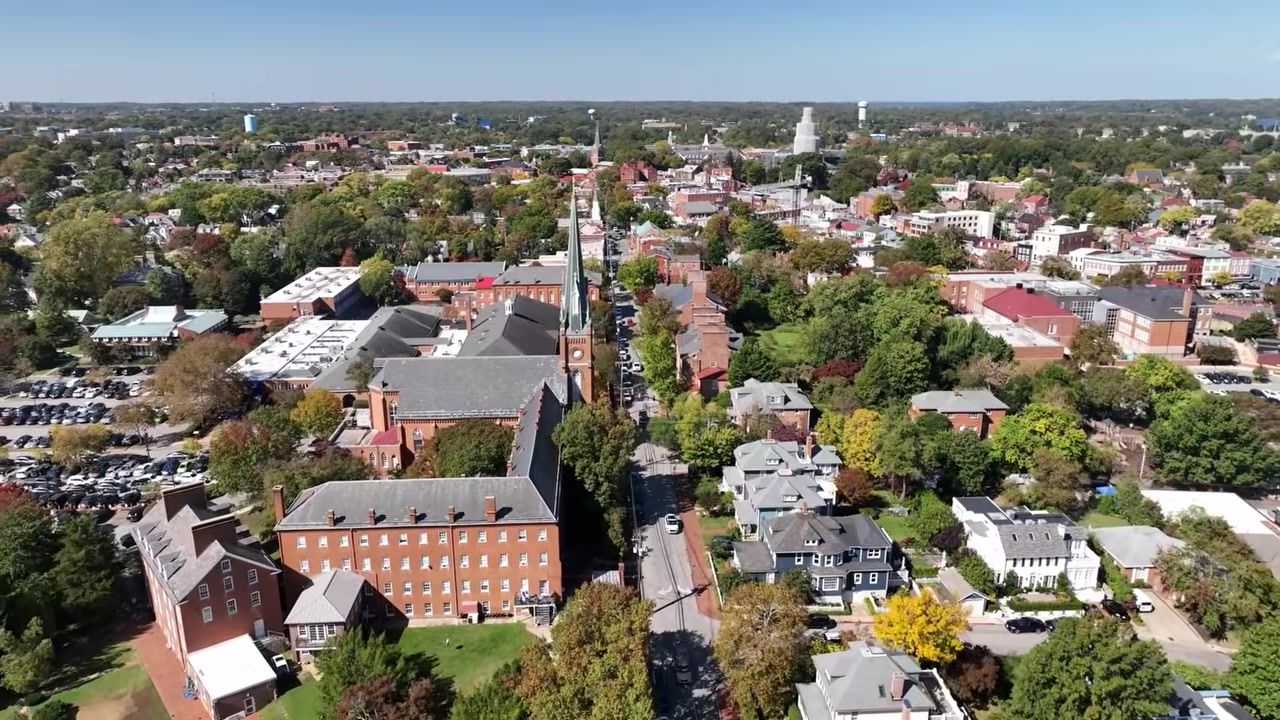
Commuting from Montgomery County
This is where Maryland really shines, and it's something I tell every buyer who's going to be working in DC proper. If you're commuting into the city from Montgomery County, you have multiple routes. You can take Wisconsin Avenue, Connecticut Avenue, Georgia Avenue, or hop on the Metro from a handful of stations. If there's an accident on one route, you're not stuck. You just take another.
That flexibility matters more than people realize. I've had clients who lived in Virginia and worked in DC, and every time there was weather or construction on one of the bridges, their commute turned into a nightmare. In Maryland, you're not funneling through a single chokepoint to get into the city. You have options.
Montgomery County also has major job centers that keep your commute local if you're not working in DC. The NIH is in Bethesda. Marriott headquarters is here. Walter Reed is a huge employer. Rockville and Gaithersburg have a very strong tech corridor with biotech firms, government contractors, and corporate offices. If your job is in Maryland, living in Maryland makes your life a lot easier.
What You're Actually Buying in Montgomery County
When buyers choose Montgomery County, they're usually prioritizing location and convenience over having the newest, biggest house. You're closer to DC. You're in established neighborhoods. You have mature trees and walkable pockets and a more suburban, residential feel.
But you're also dealing with older homes, and that means older systems, older layouts, and often a renovation somewhere in your future. If you want new construction in Montgomery County, it exists, but it's going to cost you. You're paying a premium for that combination of new and close-in.
The other thing worth noting: as of spring 2026, the Maryland market is less competitive than Northern Virginia. We're not seeing the same level of multiple offers and escalating prices that Fairfax County is experiencing right now. That doesn't mean it's a buyer's market, but it does mean you have a little more breathing room when you're making an offer.
Fairfax County: New Construction and Bridge Bottlenecks
Fairfax County is where a lot of buyers end up when they want more house for their money or they're prioritizing newer construction. You can find bigger homes, newer layouts, and in some areas, like Ashburn and parts of Fairfax, there's a lot more new construction mixed in. If open floor plans and modern finishes are non-negotiable for you, Virginia often delivers that at a price point that feels more accessible than Montgomery County.
But here's the trade-off: getting a newer, bigger home often means living further out. And in Northern Virginia, that distance isn't just about miles. It's about how spread out everything feels and how much time you're spending in the car.
Virginia's tax structure is simpler on the income side. You only pay state income tax, no county layer like Maryland. Property taxes in Fairfax County are around 1 to 1.1% of your home's value, so pretty comparable to Montgomery County. But then there's the car tax, and this is the one that surprises people.
In Virginia, you pay a yearly personal property tax on your vehicle. It's based on the value of your car, and it's not a one-time thing. Every single year, you're getting a bill. If you have a newer car worth around $40,000, you could be paying somewhere in the range of $1,000 to $2,000 a year depending on the county and any tax relief that applies. If you have multiple cars, you can do the math. That adds up over time, and it's something a lot of buyers don't factor in when they're comparing Maryland to Virginia.
So yes, your income tax is lower in Virginia. But when you add in that yearly car tax, the overall tax picture isn't as clear-cut as it seems.

Commuting from Fairfax County
This is where Virginia gets tricky, and it's the part I see buyers underestimate the most. If you're working in Virginia, Tysons, Arlington, Amazon HQ2, your commute is obviously easier if you live in Virginia. But if you're commuting into DC from Fairfax County, you're usually crossing a bridge to get across the Potomac River.
And those bridges are a problem.
If anything goes wrong, weather, an accident, construction, your commute from Virginia to DC can be brutal. You're funneling through a limited number of crossings, and when one of them backs up, there's not always a good alternate route. I've had clients sit in traffic for an hour on a route that should take 25 minutes, and it's not a once-in-a-while thing. It's a regular reality.
Even when nothing goes wrong, the Virginia commute into DC can just feel longer because of congestion and those bridge bottlenecks. It's not just about the time on paper. It's how it feels every single day, and over time, that wears on people.
If your job is in Virginia, this isn't an issue. Fairfax County has major employment hubs, and living close to where you work makes a huge difference. But if you're working in DC and living in Virginia, you need to map out your actual commute, not just look at the distance on a map, and factor in what happens when things go wrong.
What You're Actually Buying in Fairfax County
When buyers choose Fairfax County, they're often getting more house for a similar price compared to Montgomery County. Newer construction. Bigger floor plans. Modern finishes. If that's what you're prioritizing, Virginia delivers.
But that often means living further out or in a developing area. You're trading location and proximity for space and newness. And I've seen this happen: buyers choose the newer house, move in, and six months later realize they would've chosen location instead. Because over time, that trade-off affects your daily life much more than people expect.
The other thing to know: as of spring 2026, Northern Virginia is significantly more competitive than Maryland. We're seeing a lot of multiple offers and escalating prices. Each house has its own story, but in general, if you're buying in Fairfax County right now, you need to be prepared to move fast and compete.
Which Area Is Right for You: Maryland vs Virginia
So how do you actually decide? Because here's what I see happen all the time: buyers choose based on one factor, taxes, or price, or a specific house they fell in love with, without thinking about how the entire area fits their life. And that's where the regret comes in.
Once you're living here, it's not just about the house. It's about your commute, your routine, your day-to-day experience. It's about whether you're spending two hours a day sitting in traffic or whether you have flexibility when things go wrong. It's about whether you're paying a car tax every year or a higher income tax. It's about whether you're in an established neighborhood with mature trees or a newer development that's still building out.
Here's how I help my clients think through it:
Choose Montgomery County if:
- You're working in DC or at a major employer in Maryland (NIH, Marriott, Walter Reed, the Rockville/Gaithersburg tech corridor) and want a shorter, more flexible commute.
- You value established neighborhoods, mature landscaping, and a more suburban, residential feel.
- You don't want to pay a yearly car tax, even if your income tax is higher.
- You're okay with older homes and older layouts, or you're prepared to pay a premium for new construction close-in.
- You want multiple commute routes into DC so you're not stuck when there's an issue.
Choose Fairfax County if:
- You're working in Virginia (Tysons, Arlington, Amazon HQ2) and want to live close to your job.
- You're prioritizing newer construction, bigger homes, and modern layouts over proximity to DC.
- You're okay with a longer or more congested commute into DC if that's where you're working.
- You'd rather pay a lower income tax and a yearly car tax than a higher combined income tax.
- You're prepared for a competitive market with multiple offers and escalating prices.
The goal isn't to pick the best one. It's to pick the one that fits your life best. Because I've had buyers who were convinced they wanted Maryland, and after looking in Virginia, they realized it actually fit their lifestyle better. And I've had the opposite happen too.
This isn't about one state being better. It's about understanding the trade-offs and making a decision based on the full picture, not just one factor.

Conclusion
If you're relocating to the DMV and trying to decide between Maryland and Virginia, the most important thing you can do is map out your actual daily life. Not just where you'll sleep, but where you'll work, how you'll get there, what your weekends will look like, and what trade-offs you're willing to make.
Because once you're here, it's not the house that defines your experience. It's everything around it.
I've been helping buyers navigate this decision for over 20 years, and I can tell you: the buyers who are happiest a year later are the ones who thought through the full picture before they made an offer. They didn't just chase the lowest price or the newest house. They chose the place that fit their life.
If you're thinking about moving to Bethesda, Rockville, Gaithersburg, or anywhere in Montgomery County, or if you're considering Fairfax County and Northern Virginia, I'd love to help you figure out which side of the Potomac is the right fit for you. Call me at 301-802-4182 or book a FREE consultation here. Let's talk through your priorities, your commute, and what you're actually looking for, and I'll help you avoid the mistakes I see buyers make every single day.
FAQ: Maryland vs Virginia for DC Area Relocation
What are the main tax differences between Maryland and Virginia?
Maryland has both state and county income tax, so your combined rate typically falls in the 7 to 9% range depending on your income. Virginia only has state income tax with no county layer, so your income tax is usually lower. But Virginia has a yearly personal property tax on your car that Maryland doesn't have, if you drive a $40,000 vehicle, that car tax could be $1,000 to $2,000 every year. Property taxes are similar in both states, around 1 to 1.1% of your home's value in Montgomery County and Fairfax County.
Is it easier to commute into DC from Maryland or Virginia?
If you're commuting into DC proper, Maryland generally offers more flexibility. You have multiple routes, Wisconsin Avenue, Connecticut Avenue, Georgia Avenue, Metro stations, so if there's an issue on one route, you can take another. From Virginia, you're usually crossing a bridge over the Potomac River, and those bridges are bottlenecks. If there's weather, an accident, or construction, your commute from Virginia to DC can turn into a much longer ordeal. If you're working in Virginia, though, living in Virginia makes your commute easier.
Do you get more house for your money in Virginia or Maryland?
It depends on what you're prioritizing. In Fairfax County, you can often find newer, bigger homes for a similar price compared to Montgomery County, especially in areas like Ashburn and parts of Fairfax. But that often means living further out. In Montgomery County, you're paying for location and proximity to DC, and a lot of the housing stock is older with older layouts. New construction in Montgomery County exists, but it's usually very expensive. So you're choosing between space and newness in Virginia versus location and established neighborhoods in Maryland.
What is the car tax in Virginia and how much does it cost?
Virginia charges a yearly personal property tax on your vehicle based on its value. If you have a car worth around $40,000, you could be paying somewhere in the range of $1,000 to $2,000 per year depending on the county and any tax relief that applies. If you have multiple cars, you pay the tax on each one. Maryland does not have a car tax, so this is an additional cost Virginia residents pay every single year that Maryland residents don't.
Which county is more competitive for buyers right now?
As of spring 2026, Northern Virginia, especially Fairfax County, is significantly more competitive than Montgomery County in Maryland. We're seeing a lot of multiple offers and escalating prices in Virginia. Maryland's market is active, but buyers generally have a little more breathing room when making an offer. Each house has its own story, but if you're buying in Fairfax County right now, be prepared to move fast and compete.
What are the major job centers in Maryland and Virginia?
In Montgomery County, Maryland, major employers include the NIH in Bethesda, Marriott headquarters, Walter Reed, and a strong tech corridor in Rockville and Gaithersburg with biotech firms and government contractors. In Fairfax County, Virginia, major employment hubs include Tysons, Arlington, and Amazon HQ2. If your job is in one state, living in that same state makes your commute significantly easier.
Recent Posts